
Why these investigations are useful
Damp and mould together
We look at moisture, mould and condensation as connected signs rather than separate annoyances.
Room use is considered
Heating, ventilation and day-to-day use all help explain why moisture is building up.
Practical actions at the end
The report points to useful next steps based on the moisture pathway that fits best.
Investigate the moisture, not just the mark
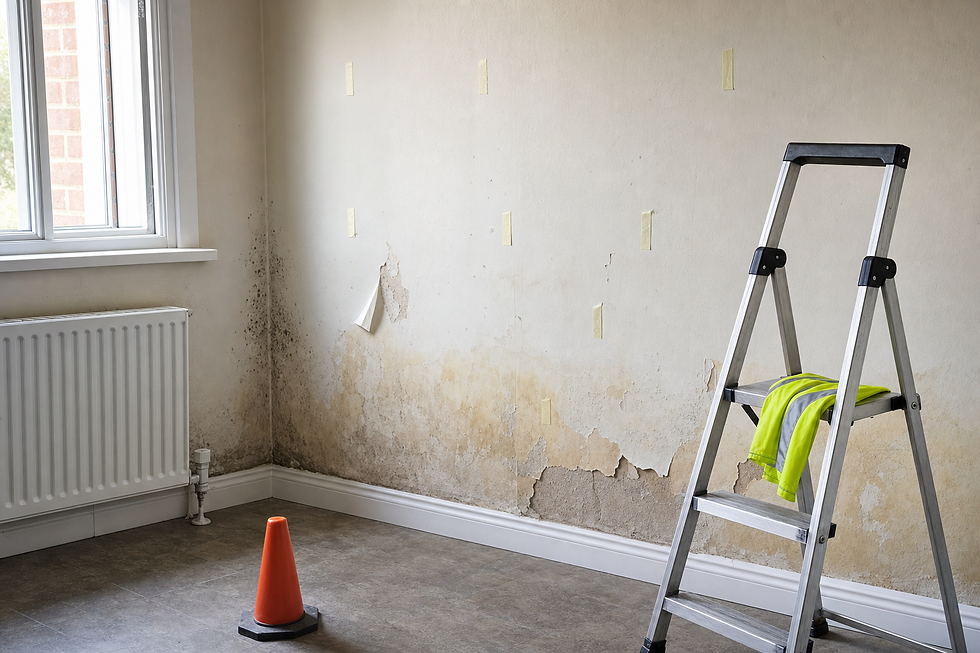
When moisture in walls keeps coming back, the patch you can see is only the bit that has decided to introduce itself. Our investigation looks at damp patches, mould growth, peeling finishes, musty odours and other signs of persistent moisture, then tests those clues against the way the property is used and built. We review moisture distribution, room use, ventilation, heating patterns, outside exposure, rainwater disposal and possible leaks.
That wider look helps when the problem refuses to fit a neat label. Walls do not get wet for their own amusement, so we work through the conditions that may be letting moisture in or holding it there.

Compare internal and external causes
A key part of the process is comparing internal and external factors rather than assuming every mark points to the same cause. Condensation from day-to-day use behaves differently from water entering through the fabric, moving from the ground or escaping from plumbing. We explain which pathway seems most plausible, what conditions are contributing and what practical actions are likely to help. The report gives you a firmer basis for repair decisions, further checks or changes to the way the space is being used.
Frequently asked questions
What symptoms suggest a moisture investigation is needed?
Persistent damp patches, mould growth, peeling finishes, musty smells and moisture that keeps reappearing in the same area are all good reasons to investigate. These signs often reflect wider conditions within the room, the building fabric or both, rather than a simple surface problem.
Do you compare inside and outside factors?
Yes. We compare internal conditions such as ventilation, heating and room use with external exposure, rainwater disposal and other building details. That comparison is often what separates environmental condensation from moisture entering through or moving within the fabric.
Will the findings point to practical actions?
Yes. We explain the most plausible moisture pathway and the conditions contributing to it, then set out practical actions that fit the evidence. That may involve repair work, follow-up checks or changes to the way a room is used and managed on a day-to-day basis.